

How To Set Up A Indoor Bike Trainer
How to Prepare Up Your Bike for Indoor Grooming
Whether you lot're fugitive the weather, avoiding people, desire a quick workout or the perfect sweat-inducing improver to your training program, getting a cycling trainer and riding your wheel indoors is a swell investment. Here are a few tips for how you lot set your infinite for indoor cycling while keeping your bike and dwelling house in pristine status.
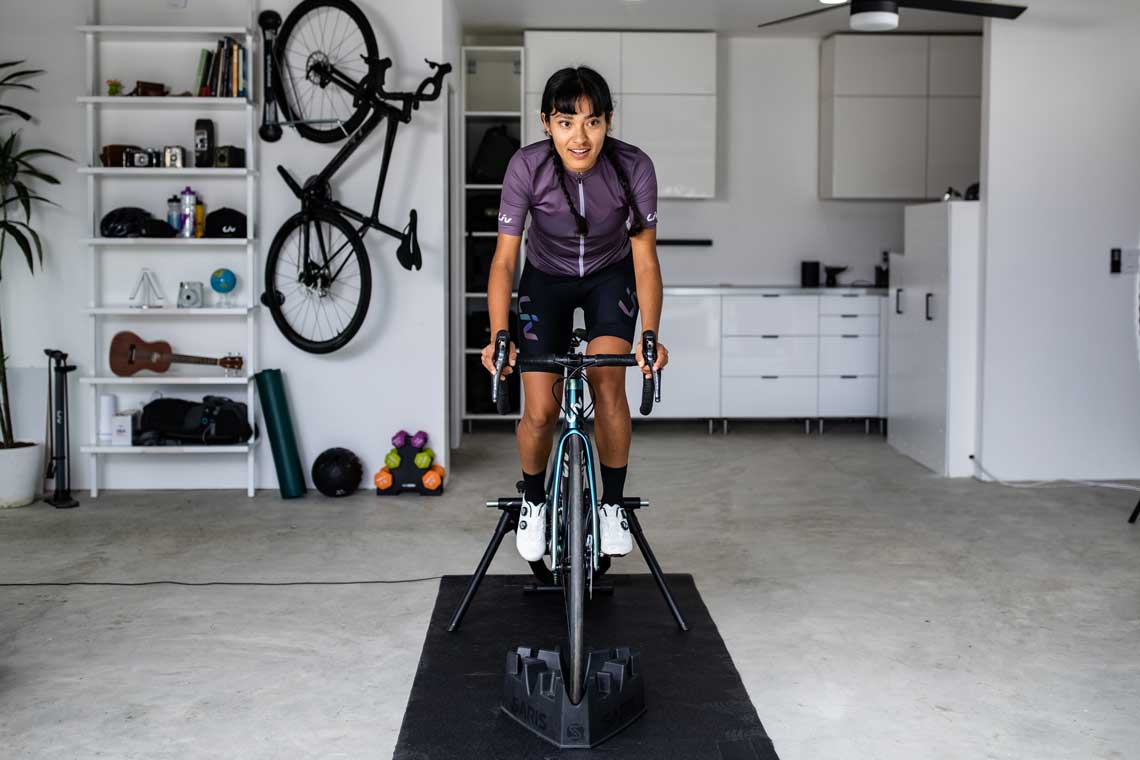
Proper Bike Fit
First thing'south first, yous'll want to make sure your bike fits you. Depending on what blazon of indoor cycling trainer you choose, you tin hook upwards your mountain bike, road bicycle, gravel bike, or hybrid to ride indoors. But no affair what bike you are riding, proper fit will get a long way to ensure a fun and comfortable spin. Unlike riding outdoors, you volition not be moving effectually on the bicycle as much, so bug with saddle height, bar width, brake placement, etc will exist even more pronounced. We always recommend getting a professional bike fit, but here are some cycle fit tips that volition give you a great place to starting time.
Protect your Flooring from Damage and Wear
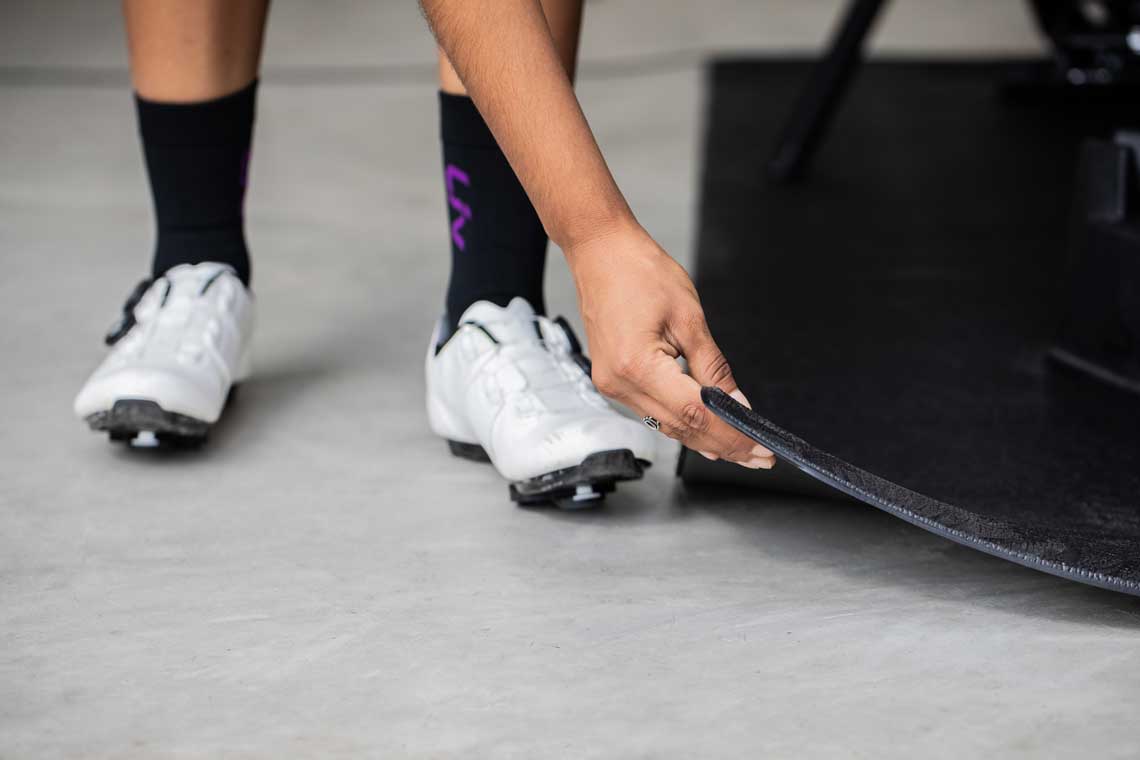
The thing about riding indoors is, you sweat a lot! Without the wind in your face, stuffed up in a room in your house, you'll heat up quickly – even if you've decked out your space with multiple fans. Information technology'south best to choose a room with a hard flooring surface. Sure, carpet volition piece of work, simply protecting your floor from pools of sweat volition be even more important. A yoga mat (or 2) will practise the trick, merely a trainer or workout-specific mat with a niggling more than substance will give you the added benefit of noise and vibration reduction.
Protect your Bike
In that location are two things that tin damage your frame and components while cycling indoors:
- Sweat corrosion. Yup, sweat eats metal! If left unchecked, the sweat that builds up nether your handlebar tape can eventually cause your handlebar to weaken to the betoken it volition suspension. Riding with a towel over your confined can reduce the sweat that collects under your bar record, but you should nevertheless alter your bar tape at least one time/year (more if you're doing a lot of indoor riding). Bug tin can also arise in your headset, bottom bracket, and seatpost. The fundamental is to wipe your bike down afterward each ride and go along your bolts lubricated with grease (check this every couple of months with regular riding). Yous can also purchase a "sweat shield" and keep in mind, carbon parts are not susceptible to corrosion!
- Bicycle strain. If using a rear wheel-mounted trainer, use the steel skewer that was included with your trainer rather than the one in your bicycle. To avert wear to your rear bicycle, the all-time choice is to apply a spare wheel equipped with a trainer-specific tire and a sturdy cassette for a quick swap before riding indoors. If y'all're using a direct bulldoze trainer, it's too best to purchase an extra cassette to go along permanently on your trainer. Merely, don't forget to keep an eye on your concatenation habiliment! Replacing your concatenation often will ensure the other parts of your drivetrain remain in skillful condition for longer.
Types of Indoor Cycling Trainers
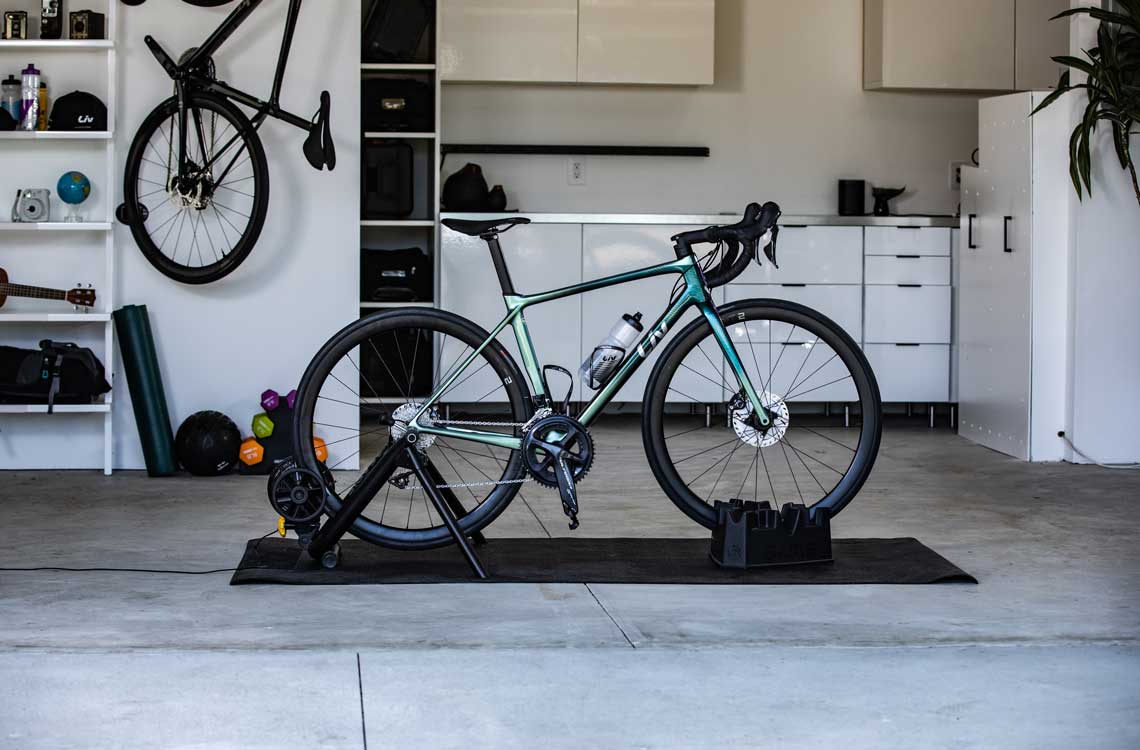
Rear Bicycle-Mounted Trainer
This type of trainer is cheaper and may or may not be "smart" (Bluetooth-enabled to modulate resistance with the help of online training apps like Zwift). As the proper noun implies, you continue your rear wheel on your bike and attach it to the trainer at the rear axle. Follow the instructions on your trainer to adjust the contact with your rear tire and ensure everything is tight earlier getting on your bike to ride. In that location are a couple of of import things to notation:
- Rear wheel-mounted trainers will likely non work with your mountain bicycle. Not only could in that location be a clearance issue for the tire width, but the more nobs there are on your tire, the louder it will be. Check bike size and tire width specifications before purchasing a wheel-on trainer.
- As noted above, consider purchasing a inexpensive rear bicycle, training tire, and cassette to foreclose excessive wear on your route-worthy bicycle.
- Rear wheel-mounted trainers provide resistance in unlike ways – air current, magnetic, and fluid.
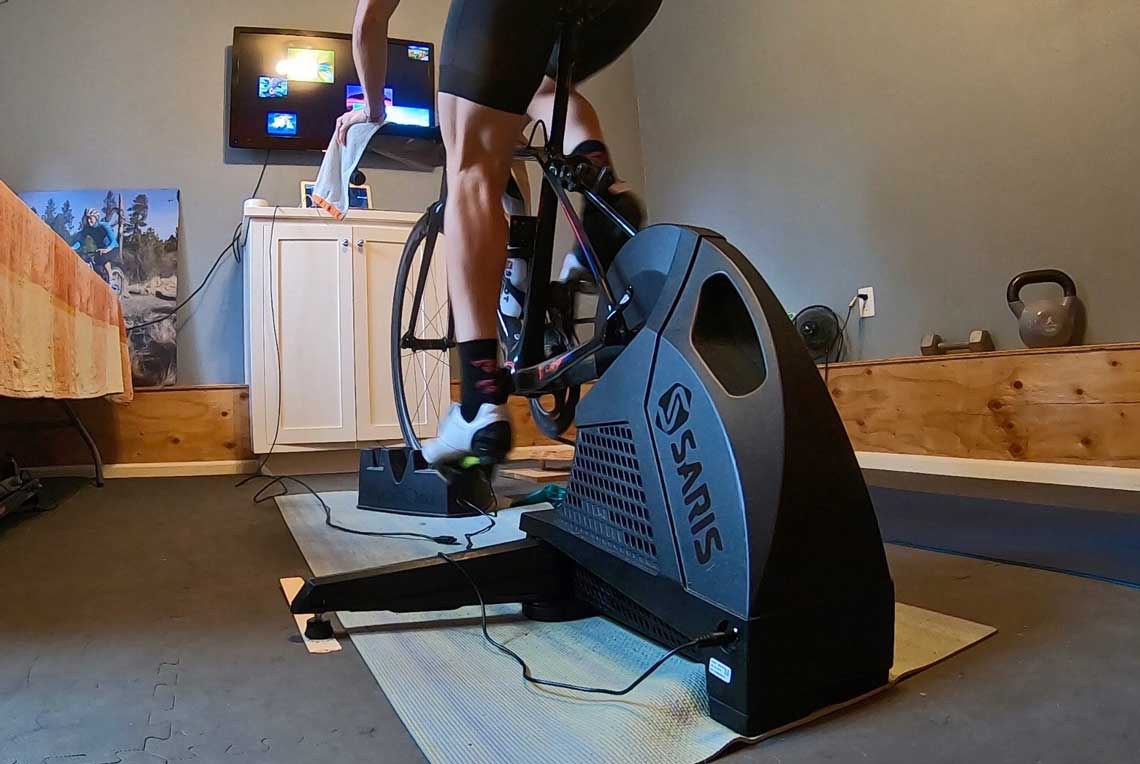
Directly Drive Trainer
These types of trainers me came onto the marketplace in 2010 and are a bit more expensive but are generally "smart" trainers capable of connecting to online apps and make riding inside feel more similar riding outside. Post-obit the instructions on your trainer, install a cassette that is compatible with the drivetrain on your bicycle. Remove your rear wheel and install your wheel directly onto the trainer. Here are a few things to go on in mind when purchasing and setting upwards a direct drive trainer:
- You will need an actress cassette. Otherwise, you'll exist removing and re-installing the cassette on your wheel every time you desire to ride indoors.
- Straight drive trainers can piece of work with about types of bikes, including mountain bikes. Just make sure to bank check the specifications on the trainer to exist sure your bicycle'south driver body and axle are compatible.
- You must exist comfortable removing the rear bicycle of your cycle for this type of trainer to make sense for yous. Want to learn how? Cheque out our video on how to fix a flat to see how to remove the a rear bike.
Rollers
Rollers are indoor training devices where you lot balance your bicycle on three cylinders – 1 in the front and two in the rear. It can be a challenge to become used to rollers, but once yous do it boosts your bike-treatment skills and keeps indoor riding engaging. Rollers are not by and large "smart" capable, though in that location are a few options out there. Desire to learn more than about rollers? Check out Allysa Seely's guide to riding rollers Here!
What Else?
It's platonic to take a designated space for your indoor cycling trainer. If possible, make sure you tin can keep your trainer, block for your front wheel, a towel, floor protection, fans, and your amusement all in the same place. That way, all you lot need to do is hook up your cycle when yous're set to ride. If you are planning on using a smart trainer with an online cycling program similar Zwift, yous'll want to ensure you have an outlet handy too as a either a TV or table where y'all can set your laptop, telephone or other Zwift-equipped device. Want to get the ultimate setup? Bank check out these different Zwift setups on BikeRadar.com.
If you don't have a smart trainer or Zwift, load up your favorite playlist, idiot box bear witness, or moving picture and those trainer miles will fly by.

Source: https://www.liv-cycling.com/global/campaigns/how-to-set-up-your-bike-for-indoor-training/25266
0 Response to "How To Set Up A Indoor Bike Trainer"
Post a Comment